

How to Screen Wet Material: Challenges, Solutions and Best Practices
Wet and sticky material is one of the most common challenges in screening operations. But moisture doesn’t necessarily mean poor screening performance. Understanding how water affects material behaviour, and choosing the right screening technology can make a significant difference to capacity, product quality and profitability.
Whether you are screening excavated soil, crushed rock, recycled concrete or gravel, the key is understanding the material before selecting the equipment.
Why is wet material difficult to screen?
Moisture changes how particles behave during screening. As water content increases, fine particles can begin to stick to larger stones instead of passing through the screen openings.
This creates several challenges:
- Screen blinding: Fine, damp particles block the screen apertures, reducing the available screening area.
- Material agglomeration: Smaller particles stick together, forming larger lumps that are difficult to separate.
- Reduced screening efficiency: Fine material remains in the coarse fractions instead of passing through the screen.
- Lower capacity: Material builds up on the screen surface, reducing throughput.
- Inconsistent product quality: The final fractions may contain unwanted fines or oversized particles.
The finer the required separation, the more sensitive the screening process generally becomes to moisture.
However, moisture alone is not always the problem.
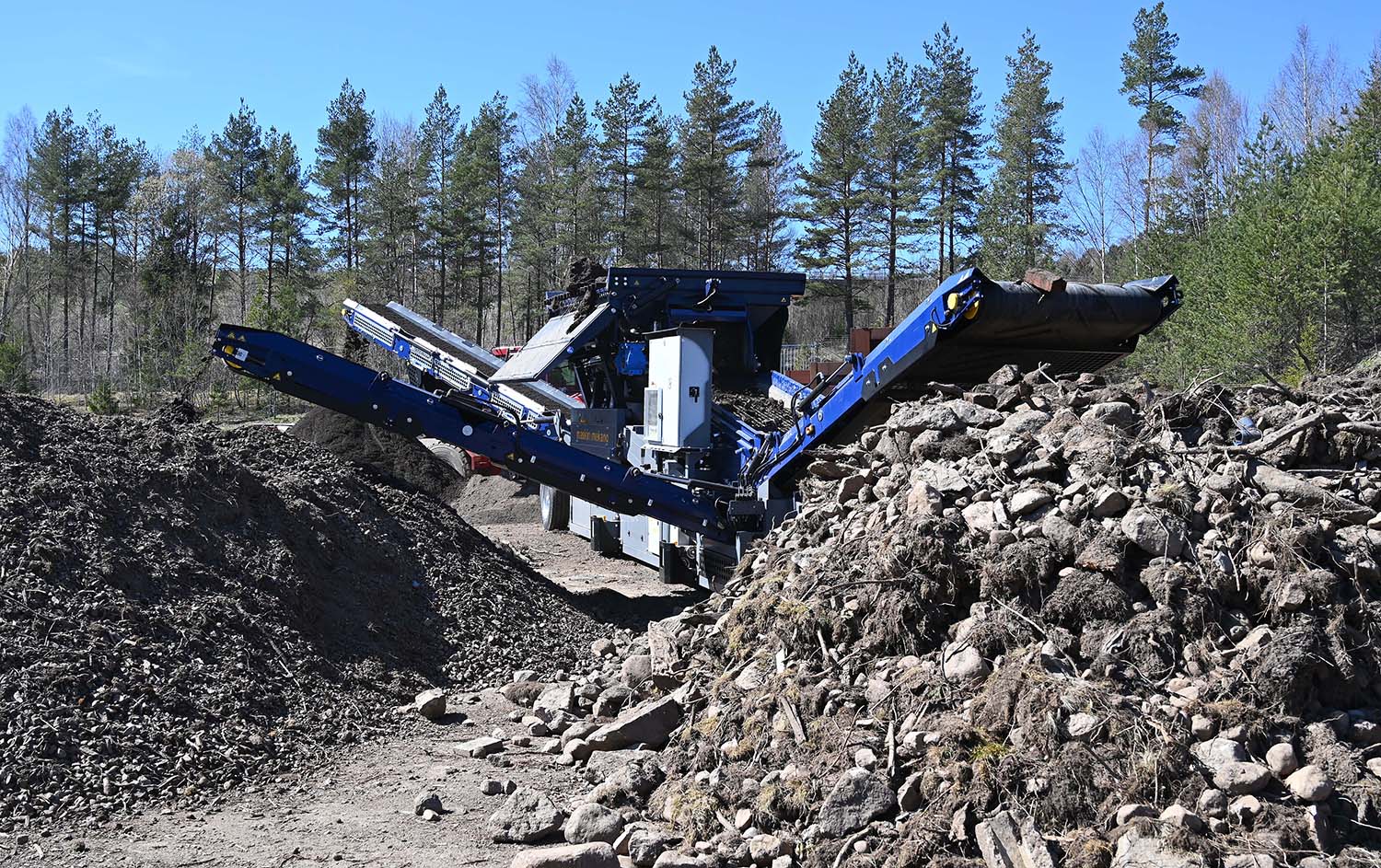
Wet material vs sticky material – what’s the difference?
Not all wet materials are difficult to screen. Clean, wet gravel may still separate relatively easily, while soil containing clay or silt can become extremely sticky, even at moderate moisture levels.The difference is cohesiveness.
Clay and fine silt can act as natural binders, causing particles to stick together, form lumps and adhere to screening surfaces. This is why two materials with similar moisture content can behave completely differently in the same screening plant. Understanding the combination of moisture, particle-size distribution and cohesiveness is essential when designing an efficient screening process.
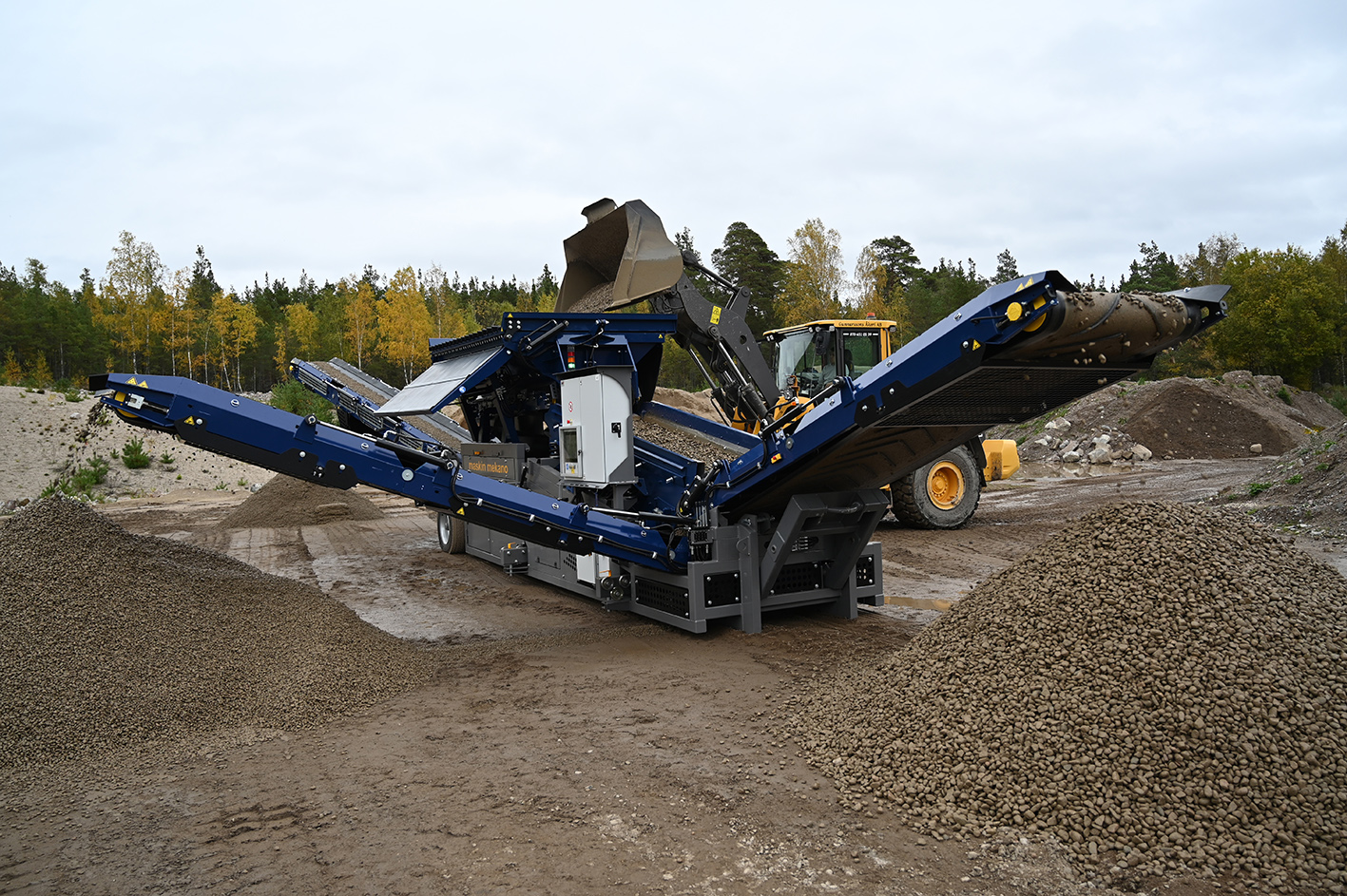
5 ways to improve screening performance in wet conditions
Choose a screen with an effective screening motion
The movement of the screen is particularly important when processing damp material. A strong, controlled screening motion helps loosen the material bed, separate particles and repeatedly expose them to the screen openings. The objective is to achieve sufficient particle movement and stratification while maintaining the retention time required for accurate separation. Maskin Mekano’s STE-screen uses a circular screening motion with a 12 mm stroke, operating at 800 rpm with an inclination of approximately 11°. This combination is designed to provide effective material movement and accurate separation, including in demanding screening applications. The STE screen has proven many times that it is the best screen for moist or sticky material, because of its unique screening technology.
Select the right screen media
Screen media have a major influence on performance when processing wet or cohesive material.Depending on the application, different types of screening surfaces may be suitable:
-Woven wire mesh for accurate separation in appropriate conditions
-Polyurethane or rubber media for applications requiring specific wear or screening characteristics
-Self-cleaning screen media to help reduce blocked apertures
-Specialised screening surfaces for particularly cohesive materials
There is no universal screen medium that works best for every wet material. The correct choice depends on particle size, moisture content, cohesiveness, required fractions and material characteristics.
Maintain a consistent feed rate
Feeding too much material onto the screen is a common mistake, particularly when conditions become difficult. An excessively deep material bed makes it harder for fine particles to reach the screen surface. When the material is wet, this can further reduce separation efficiency.A consistent, controlled feed helps maintain an appropriate bed depth and gives particles sufficient opportunities to pass through the apertures.
Maximum throughput does not always mean maximum productivity.In many applications, a slightly lower feed rate can improve separation quality and increase the amount of marketable material produced.
Allow sufficient screening time
Effective screening requires particles to repeatedly contact the screening surface. When wet fines adhere to larger particles, separation becomes more difficult. Sufficient retention time is therefore especially important. Screen inclination, screening motion, feed rate and screen length all influence how long the material remains on the screen. The aim is to find the right balance between material transport, screening efficiency and capacity.
Consider washing when dry screening reaches its limits
Sometimes the material is simply too cohesive for efficient dry screening. When clay, silt or other fine particles strongly adhere to coarser material, washing may be the more appropriate processing method. Water helps release adhering fines and allows the material to be separated into cleaner fractions.

Wet processing may be particularly relevant for:
- Clay-rich excavated soil
- Contaminated sand and gravel
- Recycled concrete with adhering fines
- Materials with high silt or clay content
- Applications requiring particularly clean aggregates
A washing process must also account for water treatment, fines management and dewatering.The goal is not simply to wash the material, but to produce higher-quality, marketable fractions economically.
Quick answers
Can you screen wet material without washing?
Often, yes. Sandy and gravelly material usually screens fine even when damp. Clay-rich material is harder and may need different screen media, a lower feed rate or washing.
Why does wet material blind the mesh?
Damp fines stick to the mesh and to larger stones, and clay forms lumps that plug the apertures.
How do I prevent blinding?
Suitable screen media, a good screening motion and a feed rate that keeps the bed thin. If that’s not enough, the process itself may need to change.
Does wet material reduce capacity?
It can, especially on fine fractions. How much depends on the material.
Which screening plant is best for wet soil?
It depends on the soil composition. Sandy and gravelly soils can be efficiently screened using machines such as the ECO4 or Ls 1202 PD. If the soil contains high levels of clay or silt, alternative screen media, adjusted feed rates or wet processing may be necessary.
Conclusion: The right screening technology makes all the difference
Wet material doesn’t necessarily mean low capacity, blocked screen meshes or poor product quality.
With the right combination of screening motion, screen media, feed rate and retention time, excellent results can be achieved even under challenging conditions.
Maskin Mekano’s STE-screen is designed for exactly this: producing clean, valuable fractions with high precision, even when processing difficult-to-screen materials.
With over 70 years of experience in screening technology, we help our customers find solutions that increase productivity, reduce operating costs and maximise the value of their materials.
Having trouble screening wet or sticky material?
Contact Maskin Mekano. We’ll help you evaluate your material, select the right screening plant and find an efficient, cost-effective solution for your operation.