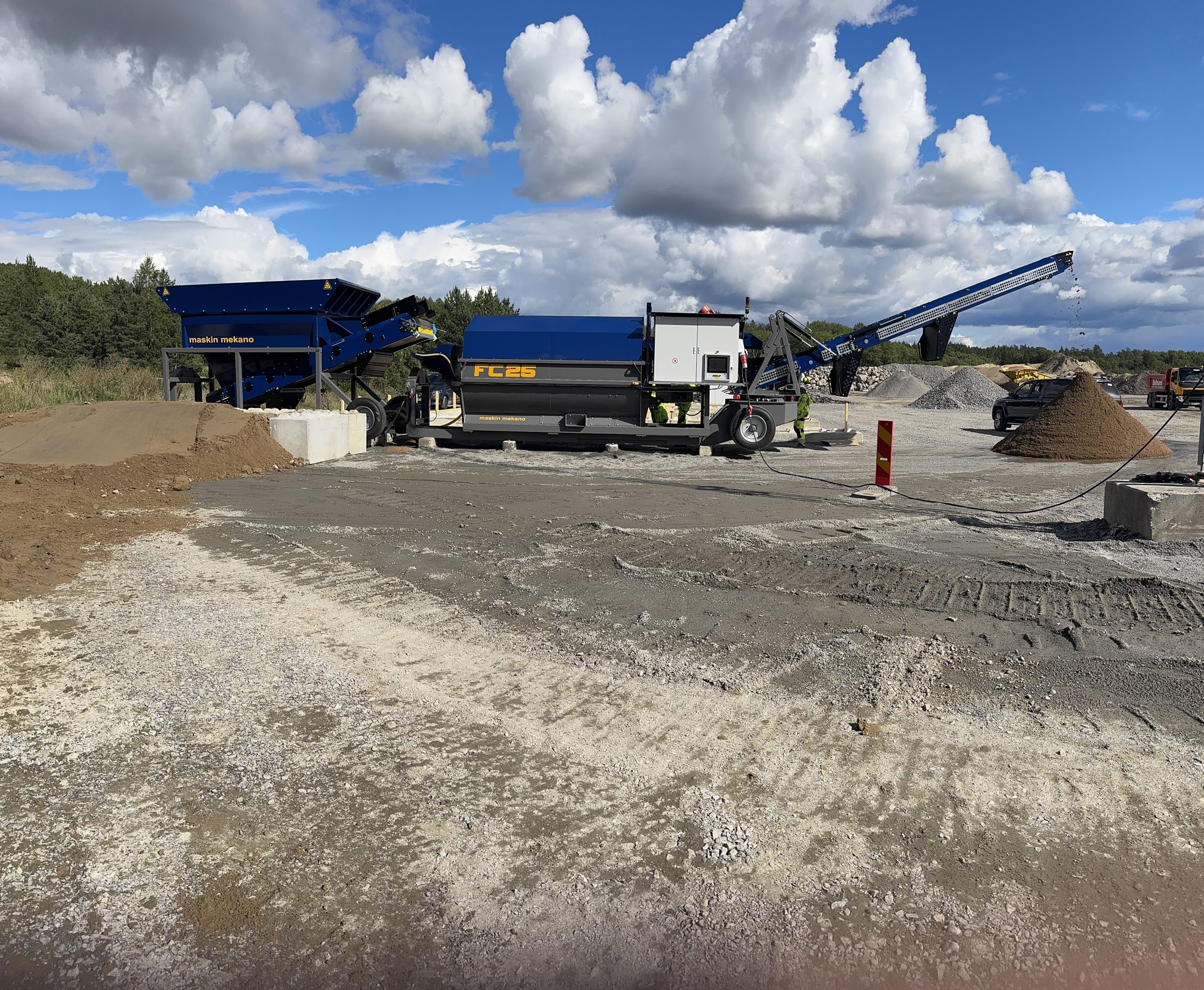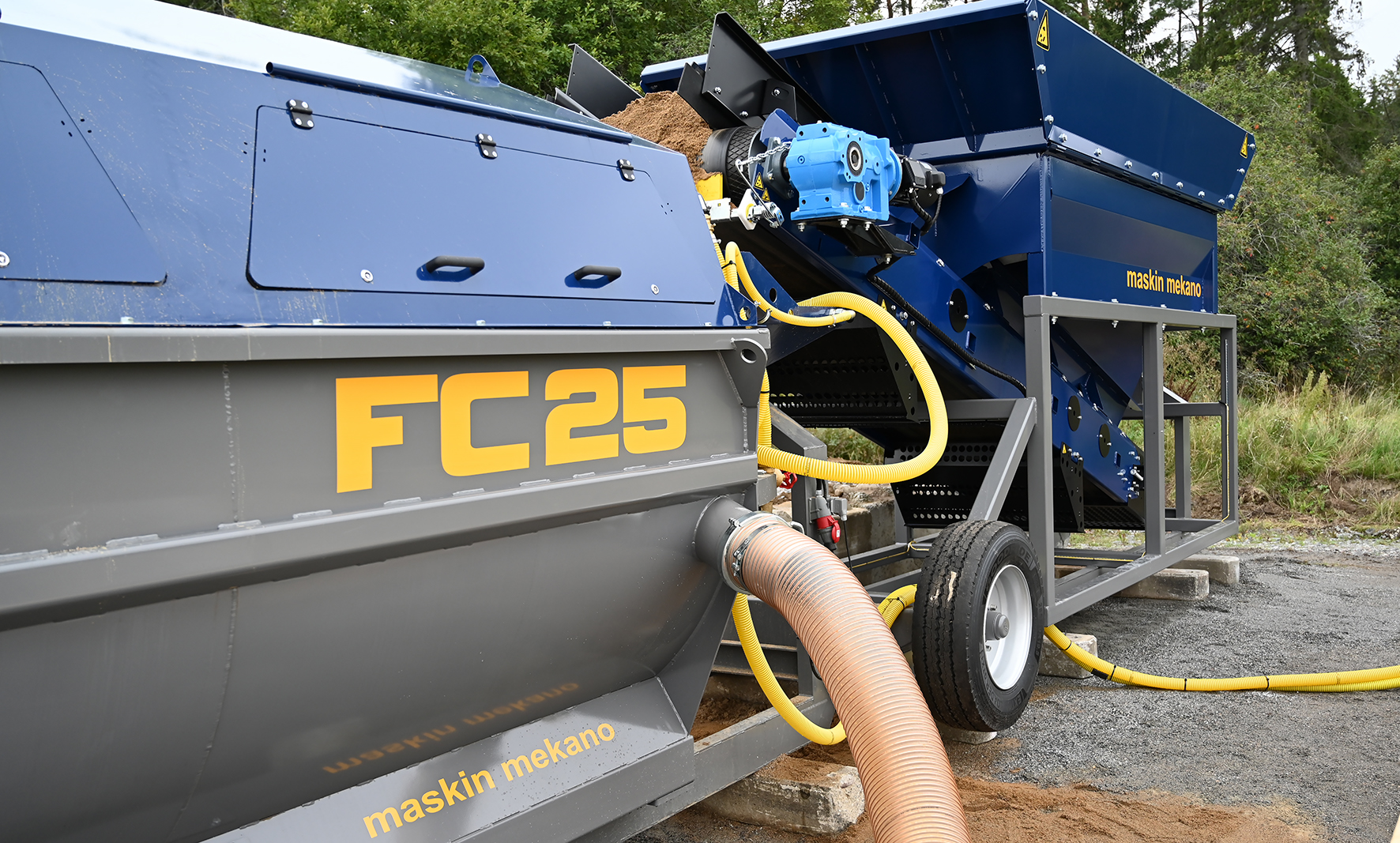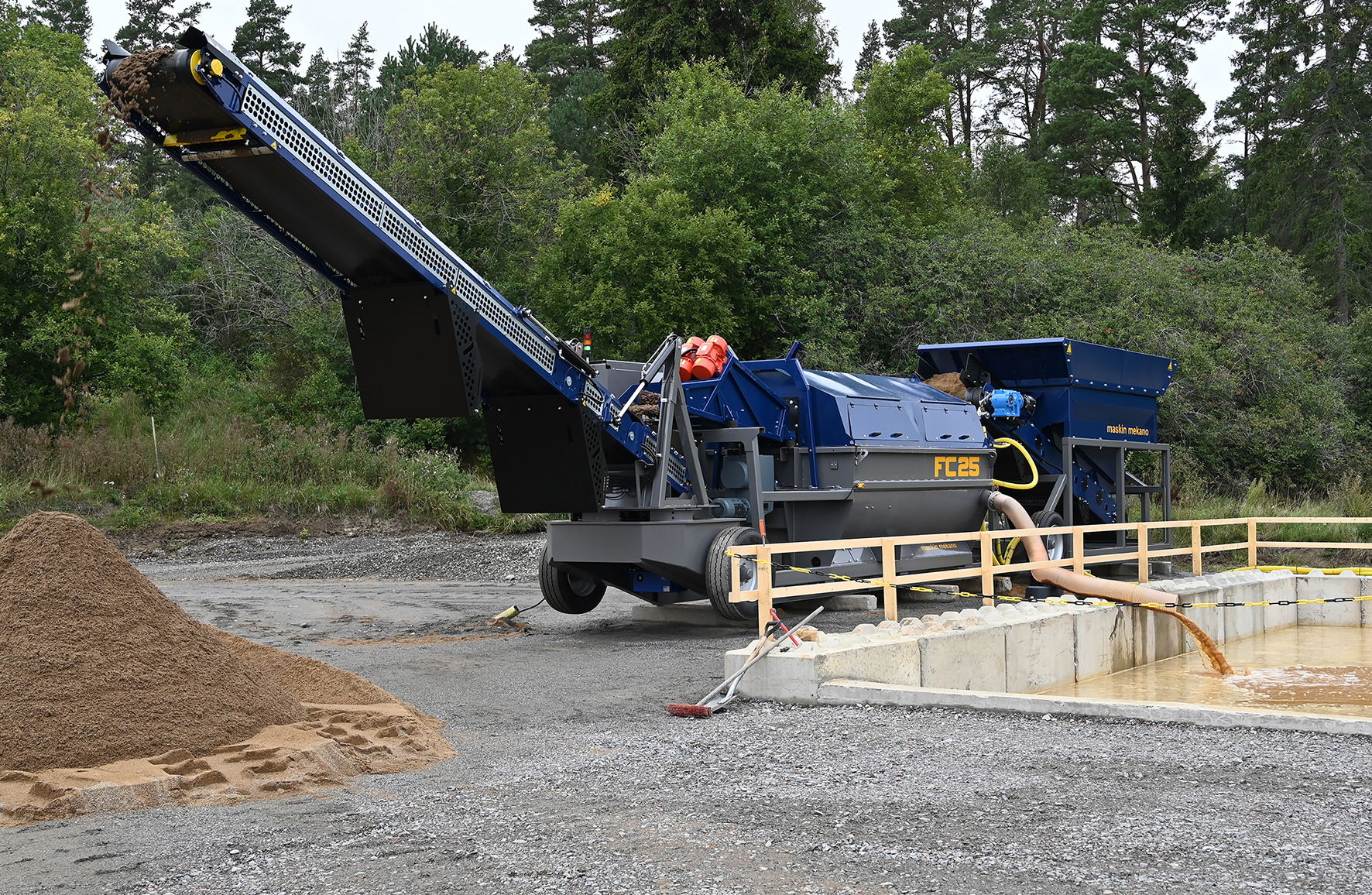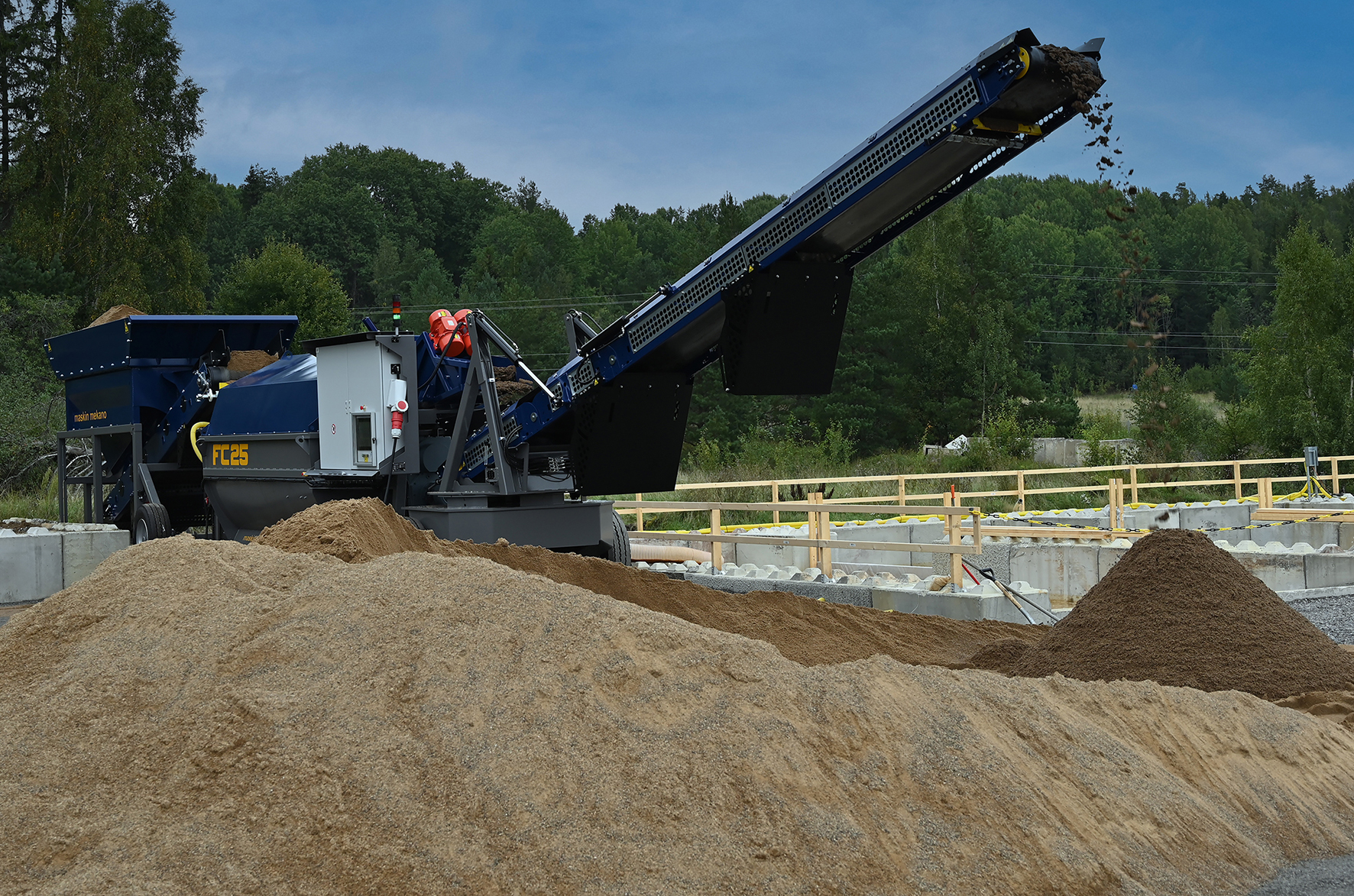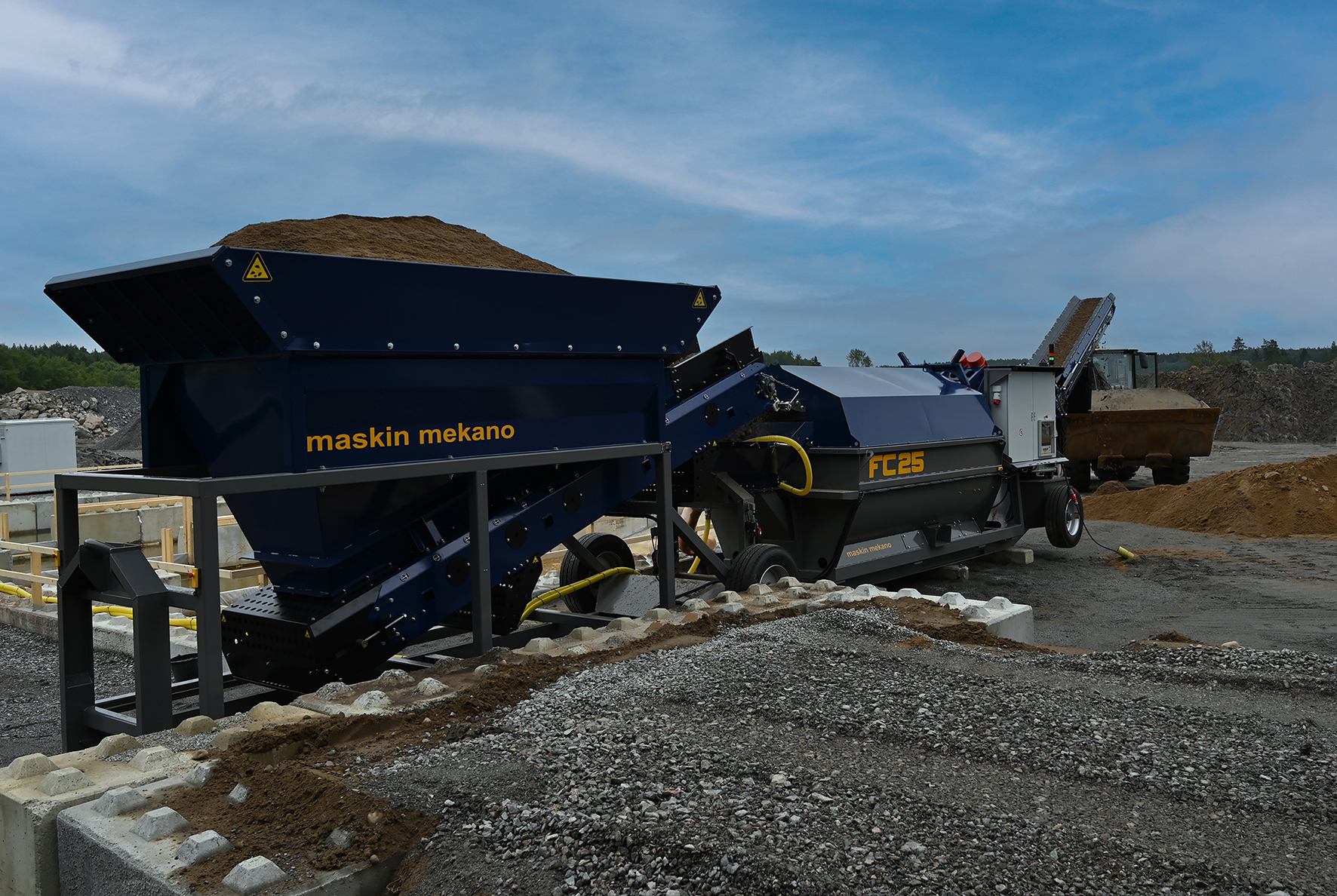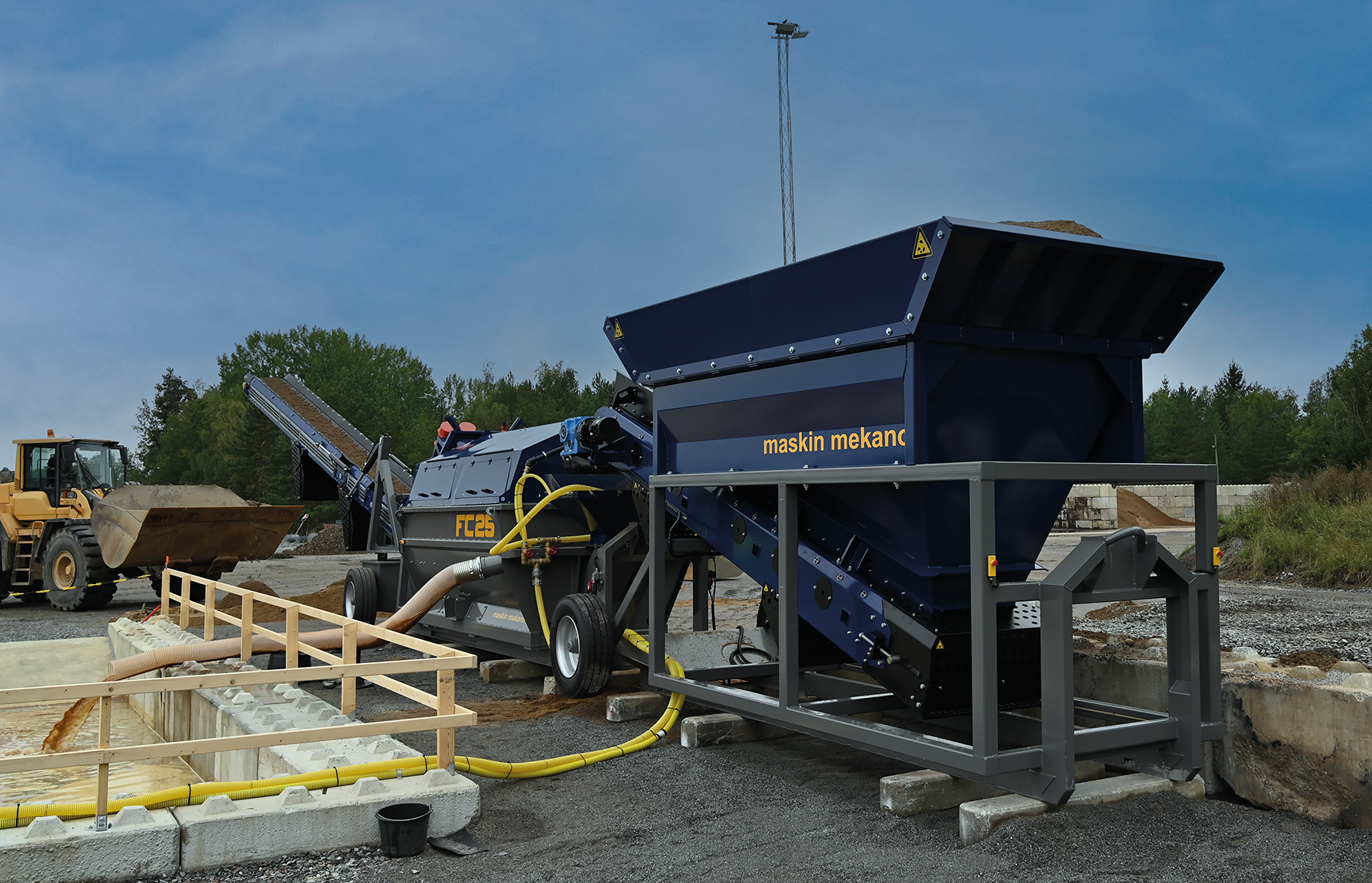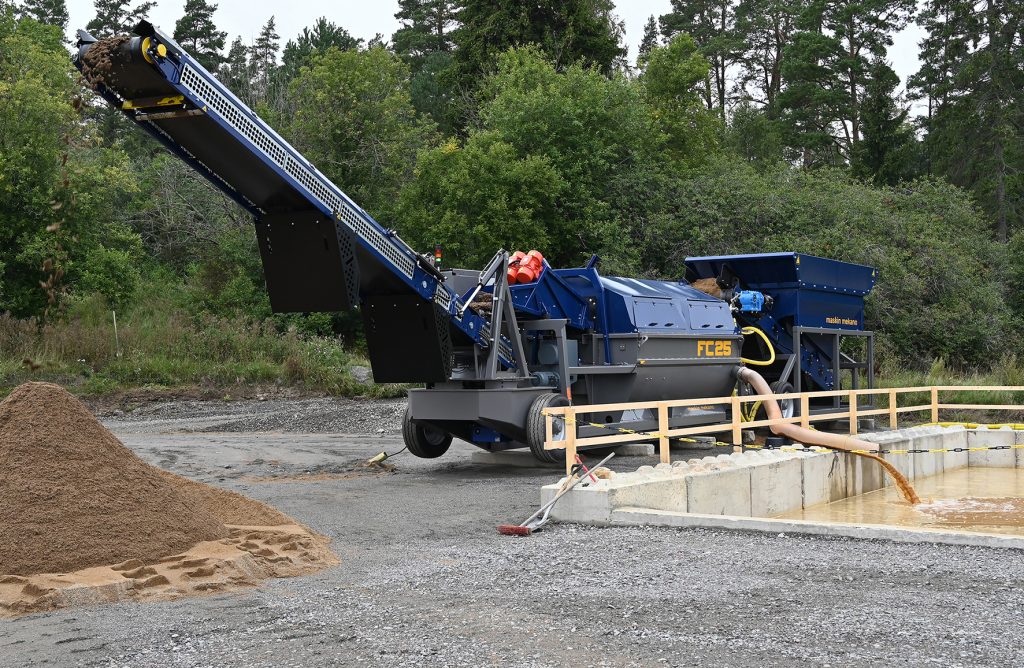
The FC25 washing plant is designed to maximize the use of surplus materials through wet screening and effective washing. This plant is ideal for adjusting stone dust for concrete production and creating sellable fractions from materials that would otherwise be wasted. The FC25 is part of the flexible FC series, making it easy to integrate with Maskin Mekano’s standard range of equipment to suit various production needs.
FC25 offers high flexibility with the option to build the plant in stationary, mobile, or semi-mobile configurations. It also features advanced water management that can be customized to both inlet/outlet solutions and full recycling. This reduces water consumption and optimizes the process depending on water availability and space constraints. The process in the FC25 is characterized by energy efficiency, reliability, and low operating costs, making it both economical and sustainable.
The Maskin Mekano FC25 is a mobile wet-processing plant for applications where washing and wet separation are required without the scale and infrastructure of a large stationary installation.
Its mobile design makes it possible to move the equipment between worksites and process material closer to where it is generated. FC25 is therefore particularly relevant for recycling, temporary projects, changing material streams and operations where flexibility is important.
Yes. A wet-processing system can be designed to treat and recirculate process water. This can reduce the requirement for fresh water and the amount of process water that needs to be managed outside the system.
The appropriate water-treatment and recirculation solution depends on the application and the material being processed.
Wet screening can improve the separation of materials that cannot be processed sufficiently by dry screening. It can also remove adhering fines and contaminants and produce cleaner, more clearly defined final fractions.
Wet screening does not, however, have to be the first step for every moist or difficult-to-screen material. With the Maskin Mekano STE screen, many moist materials can still be separated effectively without water. Wet processing becomes particularly valuable when washing and the removal of adhering fines are required to achieve the desired final material quality.
Yes, in applications where wet processing makes it possible to upgrade material that could otherwise not be reused. A greater proportion of the material may then potentially be recovered as a usable secondary raw material.
The actual result depends on the feed material, the contaminants present and the quality requirements for the final product.
Wet processing normally requires more process equipment and water management than dry screening. It therefore makes sense to determine first whether the required result can be achieved through efficient dry screening.
When wet processing is necessary, the economics should be assessed across the complete process. Higher material value and reduced costs for disposal, reject material or reprocessing can have a significant impact on the overall economics.
For operations where a large stationary wet-processing plant cannot be economically justified, a mobile solution such as the Maskin Mekano FC25 can provide a cost-effective alternative.
Start with the required end product rather than simply the moisture content of the feed material.
If the objective is size separation and the material can be separated into the required fractions through efficient dry screening, adding water may be unnecessary. Maskin Mekano's STE screen is designed to maintain efficient screening performance with many moist and difficult-to-screen materials.
If clay, silt, mortar residues or other fines remain attached to the coarser particles and prevent the required material quality from being achieved, wet processing should be considered.
Yes. The choice depends both on the properties of the material and the required final product.
The same crushed concrete, for example, may be dry screened when the main objective is particle-size separation, while wet processing may be selected when adhering fines and residues also need to be removed.
Dry screening and wet processing should therefore be regarded as complementary processes rather than competing technologies.

Electric operation OR Low emissions

The Vibroblock concept

Aggressive stroke

Protection in accordance with regulations

Touchscreen

Low

In Sweden